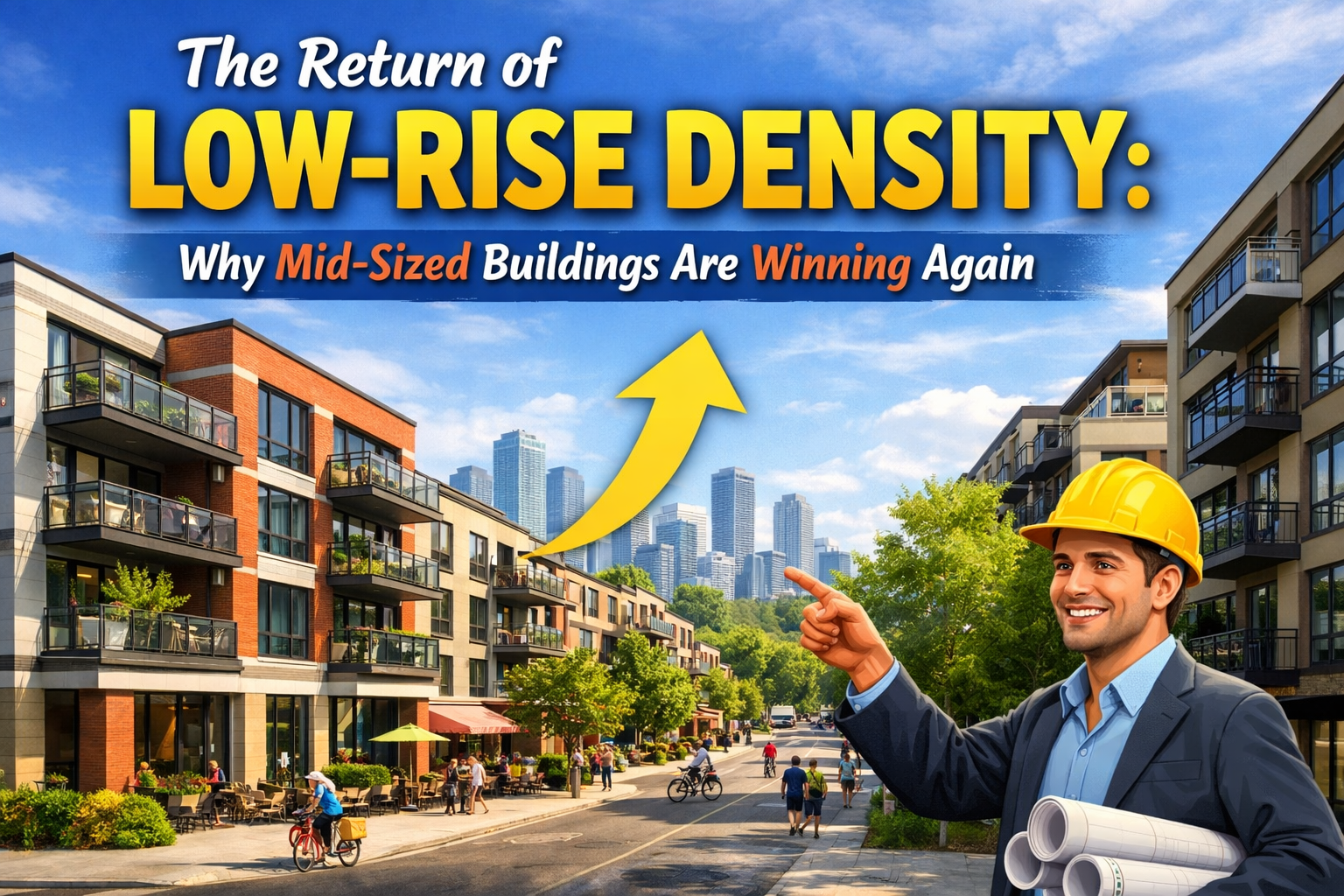
The Return of Low-Rise Density: Why Mid-Sized Buildings Are Winning Again
Low rise density housing is making a comeback as mid-sized buildings offer better livability, affordability, and urban balance. Discover why this model is reshaping real estate markets.
Table of Contents
Introduction
Low rise density housing is re-emerging as a preferred urban development model after decades dominated by high-rise construction. As cities reassess livability, infrastructure strain, and community design, mid-sized buildings—typically ranging from four to eight stories—are proving to offer a balanced alternative between suburban sprawl and vertical megastructures.
This renewed interest in human-scale density is influencing zoning reforms, investment strategies, and buyer preferences across global real estate markets.
What Is Low Rise Density Housing?
Low rise density housing refers to mid-sized residential developments that provide meaningful population density without relying on skyscrapers. These projects typically include: The Return of Low-Rise Density: Why Mid-Sized Buildings Are Winning Again 2026
- Apartment blocks between 4–8 floors
- Walkable layouts connected to street-level retail
- Shared green spaces and courtyards
- Reduced reliance on elevators and complex infrastructure
- Integration into existing neighborhood fabric
This model allows cities to accommodate growth while maintaining accessibility and community connection.
Why Cities Are Shifting Away from Extreme Vertical Growth
For years, high-rise towers symbolized modernization and land efficiency. However, many cities are now reevaluating their long-term sustainability due to: The Return of Low-Rise Density: Why Mid-Sized Buildings Are Winning Again 2026
- High construction and maintenance costs
- Infrastructure pressure on transport and utilities
- Reduced neighborhood cohesion
- Greater environmental footprint per building
- Market saturation in luxury vertical housing
These challenges are encouraging planners to reconsider low rise density housing as a more resilient urban solution.
Buyers Are Prioritizing Livability Over Height
Post-pandemic lifestyle changes accelerated demand for homes that balance proximity with comfort. Residents increasingly prefer environments that feel connected to the street rather than isolated in tall structures.
Key lifestyle advantages of low rise density housing include: The Return of Low-Rise Density: Why Mid-Sized Buildings Are Winning Again 2026
- Easier access to outdoor spaces
- Less congestion within buildings
- Stronger sense of community interaction
- More natural light and ventilation
- Reduced dependence on mechanical systems
This shift is redefining what modern urban living looks like.
Developers Benefit From Faster and More Flexible Construction
Mid-sized developments often present fewer engineering challenges than skyscrapers, enabling more efficient project timelines and cost control.
From an investment standpoint, low rise density housing offers: The Return of Low-Rise Density: Why Mid-Sized Buildings Are Winning Again 2026
- Lower construction risk compared to high-rise towers
- Phased development opportunities
- Greater adaptability to changing demand
- Broader buyer and rental appeal
- Easier integration into mixed-use neighborhoods
These advantages make mid-rise formats attractive in both mature and emerging markets.
Urban Planning Is Embracing “Gentle Density”
Many municipalities are introducing policies that encourage incremental density rather than dramatic skyline changes. This planning philosophy—sometimes called gentle density—supports population growth while preserving neighborhood character.
Through zoning updates and redevelopment incentives, cities are enabling low rise density housing to replace underutilized land such as aging commercial zones or parking areas.
Sustainability Benefits Are Driving Adoption
Environmental considerations are also contributing to the rise of mid-sized developments. Compared to tall buildings, low-rise projects generally: The Return of Low-Rise Density: Why Mid-Sized Buildings Are Winning Again 2026
- Require less energy for vertical transportation
- Use simpler structural materials
- Allow for more efficient natural ventilation
- Integrate more easily with green landscaping
- Reduce long-term maintenance emissions
These efficiencies align with global goals for more sustainable urban expansion.
Investors See Stability in Mid-Sized Residential Assets
From an investment perspective, low rise density housing often delivers consistent performance due to its wide appeal across demographics. Families, professionals, and downsizing residents all find mid-rise environments accessible and practical.
This diversified demand base can translate into: The Return of Low-Rise Density: Why Mid-Sized Buildings Are Winning Again 2026
- Lower vacancy volatility
- Balanced pricing segments
- Long-term tenant retention
- Strong integration with local economies
Such characteristics position low-rise developments as durable, income-generating assets.
Challenges That Must Be Managed
Despite its advantages, expanding low rise density housing requires thoughtful implementation to avoid urban sprawl or inefficient land use.
Key considerations include: The Return of Low-Rise Density: Why Mid-Sized Buildings Are Winning Again 2026
- Ensuring adequate transport connectivity
- Maintaining design quality to support density goals
- Preventing underutilization of valuable urban land
- Coordinating infrastructure upgrades alongside development
When carefully planned, mid-sized buildings can achieve density without sacrificing functionality.
The Future of Balanced Urban Growth
The return of mid-sized development signals a recalibration of urban priorities. Rather than choosing between suburban expansion and vertical intensity, cities are increasingly adopting hybrid models that emphasize accessibility, sustainability, and human-scale environments.
This positions low rise density housing as a critical component of next-generation city planning.
Conclusion
The resurgence of low rise density housing reflects a broader shift toward balanced urbanization. Mid-sized buildings provide an effective middle ground—delivering density, livability, and economic viability without the complexities of high-rise construction.
As cities seek smarter ways to grow, this approach is gaining recognition as a practical, sustainable model for accommodating future populations while maintaining the qualities that make neighborhoods desirable places to live.