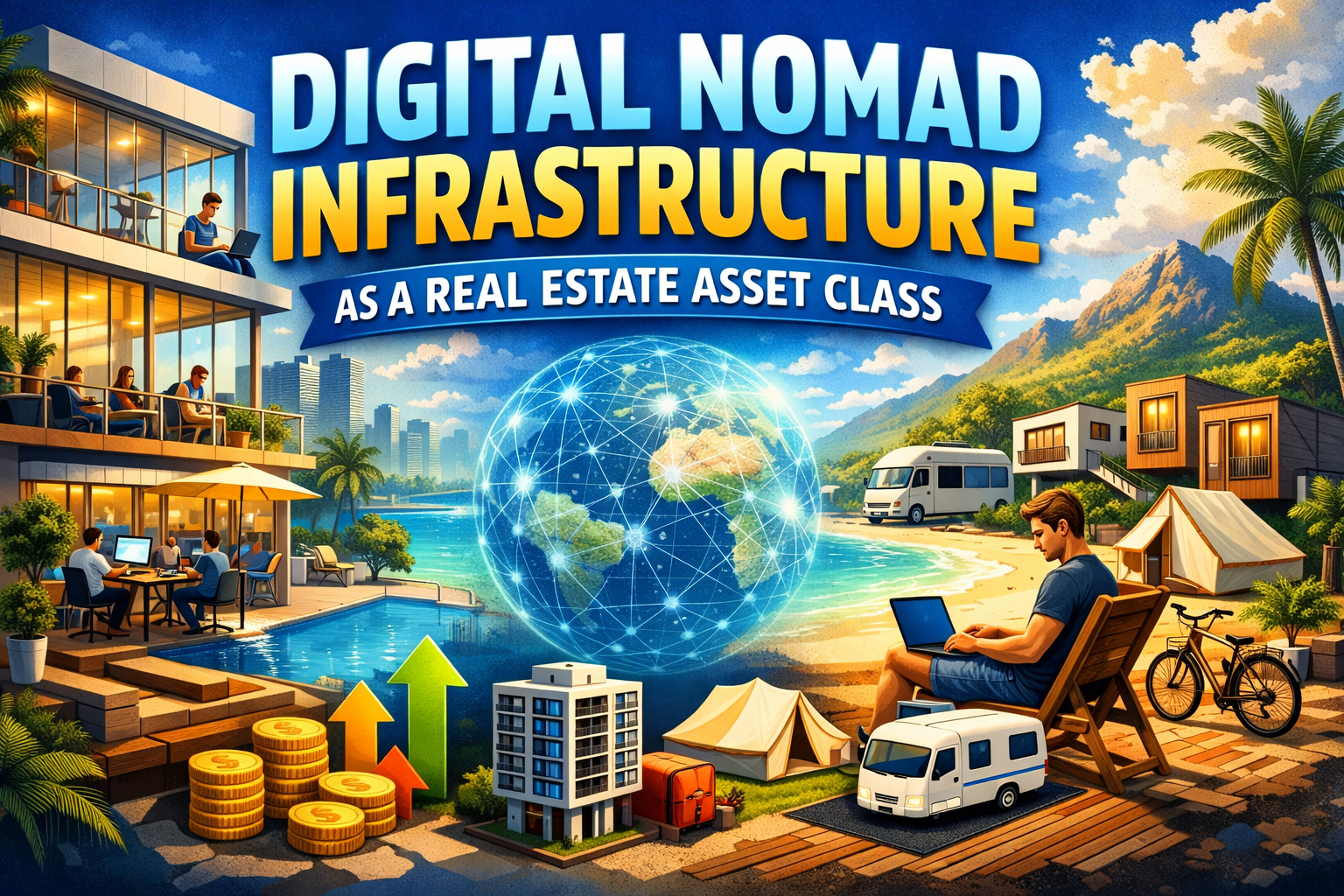
Digital Nomad Infrastructure as a Real Estate Asset Class
Learn how digital nomad infrastructure is emerging as a new real estate asset class, driving demand for flexible housing, co-living spaces, and remote-work-ready properties worldwide.
Table of Contents
Introduction Of Digital Nomad Infrastructure as a Real Estate Asset Class
The global workforce is undergoing a structural transformation. Remote work, once considered a temporary adjustment, has evolved into a long-term lifestyle for millions of professionals. This shift has given rise to a new category of global residents—digital nomads—who choose where to live based on quality of life, connectivity, and flexibility rather than proximity to a fixed office.
As this population grows, real estate markets are beginning to recognize digital nomad infrastructure not just as a hospitality trend, but as an investable asset class with predictable demand, recurring revenue models, and international scalability.
Who Are Digital Nomads and Why They Matter to Real Estate
Digital nomads are location-independent professionals who work remotely using digital tools. They include:Digital Nomad Infrastructure as a Real Estate Asset Class
- Tech employees working fully remote
- Freelancers and consultants
- Entrepreneurs running online businesses
- Content creators and remote teams
- Knowledge workers relocating across countries
Unlike tourists, digital nomads stay longer—often months at a time—creating sustained housing demand that sits between traditional rentals and hotels.
This behavioral pattern is reshaping how properties are designed, leased, and monetized.
From Hospitality to Hybrid Living Models
Traditional real estate categories—residential, commercial, and hospitality—do not fully meet the needs of mobile professionals. In response, developers are creating hybrid living environments that combine elements of all three.
These spaces typically feature:
- Fully furnished, flexible-term residences
- High-speed internet infrastructure as a core utility
- Integrated co-working environments
- Community-driven layouts encouraging networking
- Turnkey services such as cleaning, events, and local onboarding
Such developments blur the line between apartment living and professional workspace, forming a new typology often described as “live-work ecosystems.”
Why Investors Are Viewing Nomad Housing as an Asset Class
Digital nomad-focused developments offer characteristics that appeal to institutional and private investors:Digital Nomad Infrastructure as a Real Estate Asset Class
1. Predictable Global Demand
Remote work is not tied to one economy. Demand comes from a global tenant base, reducing dependence on local employment cycles.
2. Premium Rental Yield Potential
Nomad-ready units command higher monthly rates due to bundled services, flexibility, and convenience.
3. Lower Vacancy Through Short-to-Mid-Term Stays
Instead of year-long leases, operators maintain rolling occupancy similar to hospitality but with lower turnover costs.
4. Scalable Portfolio Opportunities
Investors can replicate successful models across multiple international destinations.
Infrastructure Is the Real Product
In digital nomad real estate, the physical building is only part of the value proposition. The true asset lies in infrastructure, including:Digital Nomad Infrastructure as a Real Estate Asset Class
- Enterprise-grade connectivity and backup power systems
- Ergonomic workspace design inside residential units
- Smart access and digital leasing platforms
- Community programming and professional networking events
- Location selection based on lifestyle attractiveness rather than central business districts
This marks a shift from space-based valuation to experience-driven real estate economics.
Emerging Global Locations Benefiting from the Trend
Cities and regions that combine affordability, lifestyle appeal, and supportive visa policies are attracting sustained nomadic populations. These destinations often invest in:Digital Nomad Infrastructure as a Real Estate Asset Class
- Remote worker visa programs
- Urban co-working hubs
- Walkable cultural districts
- Reliable digital infrastructure
- International connectivity via air travel
Secondary cities—not just major capitals—are increasingly becoming preferred locations, redistributing real estate demand globally.
Design Is Changing to Support Mobility
Digital nomad-oriented properties prioritize adaptability over permanence. Key design trends include:Digital Nomad Infrastructure as a Real Estate Asset Class
- Modular interiors suitable for short and long stays
- Soundproof video conferencing areas
- Shared amenities replacing private excess space
- Storage-light living tailored to mobile residents
- Community kitchens and social zones encouraging collaboration
The focus is less on ownership psychology and more on functionality and flexibility.
Challenges and Considerations for Developers
While promising, this asset class requires specialized operational strategy. Developers must address:
- Regulatory differences between residential and hospitality zoning
- The need for continuous service management
- Cultural integration with local communities
- Pricing models that balance flexibility with stability
- Technology maintenance as a core operational cost
Success depends not only on construction but on long-term operational excellence.
Long-Term Implications for the Real Estate Industry
Digital nomad infrastructure reflects a broader evolution toward mobility-driven living. As work becomes less geographically anchored, real estate must respond by becoming more service-oriented, globally connected, and adaptable.
This shift suggests that future property portfolios may include:
- Distributed global residential networks
- Subscription-style living models
- Mixed-duration leasing ecosystems
- Real estate integrated with digital platforms rather than static ownership structures
In this context, flexibility itself becomes a monetizable feature.
What Investors Should Watch Going Forward
Investors evaluating this sector should monitor : Digital Nomad Infrastructure as a Real Estate Asset Class
- Growth of remote work policies across multinational firms
- Government incentives targeting location-independent workers
- Demand for mid-term rentals (1–6 months)
- Technology infrastructure standards within residential projects
- Partnerships between developers and co-living operators
These indicators will determine which markets mature into long-term hubs rather than short-lived trends.
Conclusion
Digital nomad infrastructure is more than a lifestyle phenomenon—it represents a redefinition of how real estate delivers value in a borderless economy. As mobility replaces permanence for a growing segment of the workforce, properties designed for flexibility, connectivity, and community are emerging as a distinct and durable asset class.
For forward-looking investors and developers, understanding this transformation offers an opportunity to participate in one of the most dynamic evolutions currently shaping global real estate.