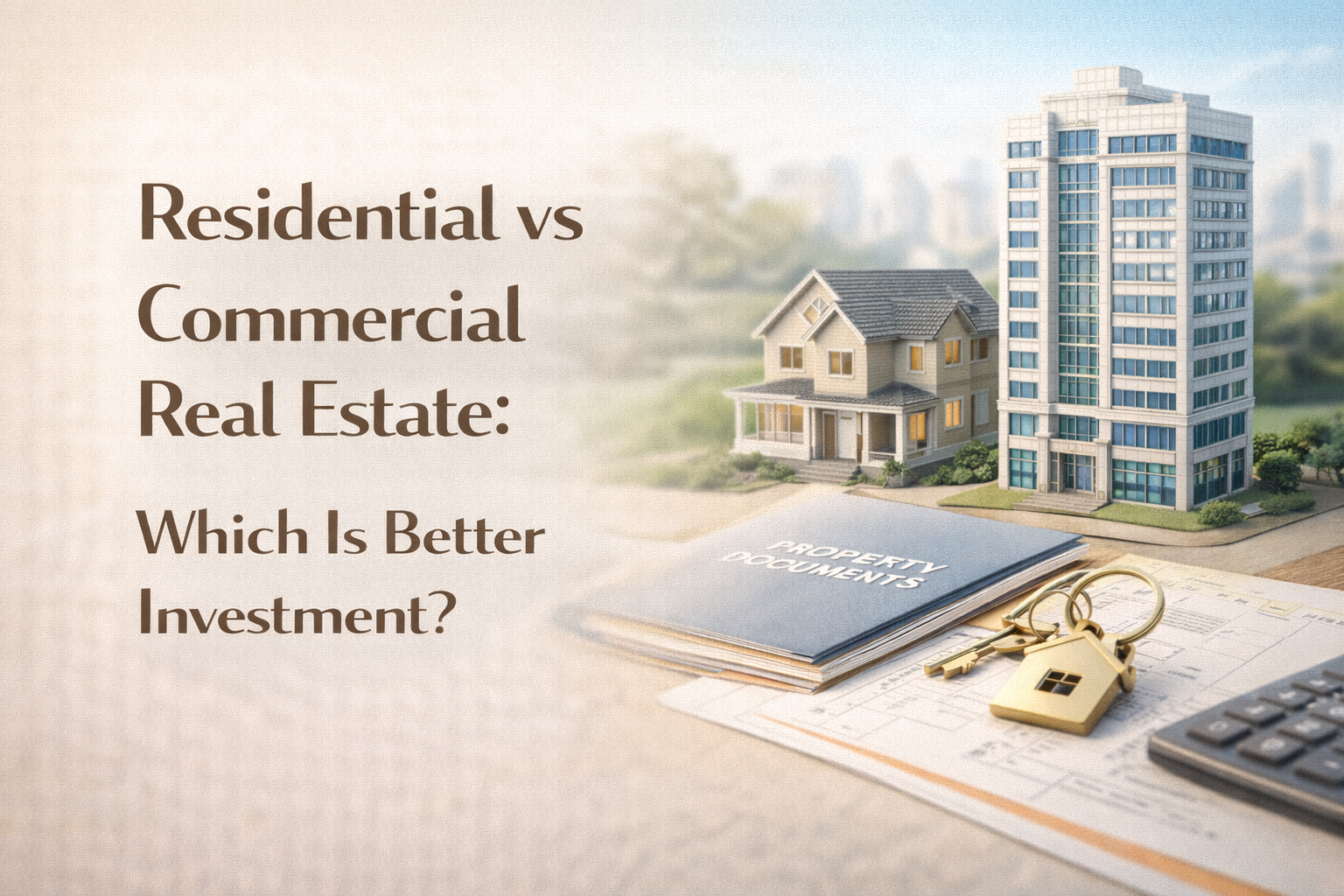
Compare residential vs commercial real estate to find the better investment in 2026. Learn differences in returns, risk, costs, and long-term growth potential.
Table of Contents
Real estate is one of the most trusted ways to build long-term wealth, but investors often face a common dilemma — should they invest in residential property or commercial property? Understanding the differences between residential vs commercial real estate can help you choose the option that aligns with your financial goals, risk appetite, and investment timeline.
In 2026, both segments are evolving with changing work patterns, urban expansion, and rising demand for quality spaces. This guide explores the key aspects of residential vs commercial real estate so you can make a smart and informed investment decision.
Understanding Residential Real Estate
Residential real estate includes properties designed for living purposes, such as:
- Apartments and flats
- Independent houses
- Villas and gated communities
- Residential plots
Investors typically earn through rental income and long-term price appreciation.
Residential property is often the starting point for new investors comparing residential vs commercial real estate, as it is easier to understand and manage.
Understanding Commercial Real Estate
Commercial real estate refers to properties used for business or income-generating activities, including:
- Office spaces
- Retail shops and showrooms
- Warehouses and logistics units
- Business complexes
Commercial investments usually provide higher rental yields but require more capital and market knowledge.
This makes evaluating residential vs commercial real estate important before entering the commercial segment.
Investment Cost Comparison
| Factor | Residential Property | Commercial Property |
|---|---|---|
| Entry Cost | Lower | Higher |
| Loan Availability | Easier approval | Stricter evaluation |
| Down Payment | Moderate | Usually higher |
| Investor Accessibility | Beginner-friendly | Experienced investors preferred |
Residential investments are generally more accessible, which is why many buyers start with them when analyzing residential vs commercial real estate.
Rental Yield Differences
Rental yield is one of the biggest distinctions between the two.
- Residential properties typically generate stable but moderate rental income.
- Commercial properties often deliver higher rental yields due to business usage and longer lease terms.
This income difference is a central factor when comparing residential vs commercial real estate for cash-flow-focused investors.
Risk and Stability Factors
Residential real estate tends to be more stable because housing demand remains consistent regardless of economic cycles.
Commercial real estate may experience:
- Vacancy risks during economic slowdowns
- Dependence on business performance
- Market sensitivity to corporate demand
Risk tolerance plays a key role when choosing between residential vs commercial real estate.
Tenant and Lease Structure Comparison
| Feature | Residential | Commercial |
|---|---|---|
| Lease Duration | Short-term (11–24 months) | Long-term (3–9 years) |
| Tenant Type | Individuals/families | Businesses |
| Rental Stability | Moderate | Often higher |
| Vacancy Risk | Lower | Can be higher |
Lease structure significantly influences returns in residential vs commercial real estate investments.
Maintenance and Management Requirements
Residential properties usually require:
- Routine repairs
- Society maintenance
- Tenant management
Commercial properties may involve:
- Structural customization for tenants
- Legal agreements
- Professional property management
Investors must consider management effort while deciding on residential vs commercial real estate.
Appreciation Potential Over Time
Residential properties generally appreciate steadily, especially in developing areas with strong infrastructure growth.
Commercial properties may appreciate faster in prime business districts but are highly location-dependent.
Understanding growth patterns is essential when comparing residential vs commercial real estate for long-term gains.
Liquidity and Resale Considerations
Residential properties are usually easier to sell because they appeal to a larger buyer base.
Commercial properties:
- Take longer to resell
- Require specific investor demand
- Depend heavily on rental performance
Liquidity differences often influence decisions in the residential vs commercial real estate debate.
Financing and Loan Availability
Banks are typically more comfortable lending for residential purchases because demand is consistent and risk is lower.
Commercial loans:
- May carry higher interest rates
- Require stronger financial profiles
- Involve stricter documentation
Financing accessibility is another important aspect of residential vs commercial real estate comparisons.
Which Investment Is Better for Beginners?
For first-time investors, residential property offers:
✔ Lower entry risk
✔ Easier financing
✔ Consistent demand
✔ Simpler legal processes
✔ Better liquidity
These advantages make residential property a safer choice for those new to residential vs commercial real estate investing.
When Commercial Real Estate Makes Sense
Commercial investment may be suitable if you:
✔ Have higher capital availability
✔ Want stronger rental yields
✔ Can handle longer vacancy cycles
✔ Prefer long-term lease contracts
✔ Understand market dynamics
Experienced investors often diversify into commercial assets after starting with residential options in the residential vs commercial real estate journey.
Importance of Legal and Regulatory Verification
Whether buying residential or commercial property, always verify approvals, titles, and project registrations through official regulatory frameworks such as RERA:
Gujarat: listed as gujrera.gujarat.gov.in
Maharashtra: maharera.mahaonline.gov.in
Karnataka: rera.karnataka.gov.in
Uttar Pradesh: up-rera.in
Regulatory verification ensures transparency and safeguards investments when evaluating residential vs commercial real estate opportunities.
Key Decision Factors to Consider
Before choosing, ask yourself:
- Do I want steady income or higher returns with risk?
- Is my investment goal long-term appreciation or rental yield?
- How much capital can I invest comfortably?
- Can I manage complex leases and tenant requirements?
- What is my risk tolerance?
Answering these questions will clarify the right direction within residential vs commercial real estate investment planning.
Final Thoughts
There is no single “better” option between residential and commercial property — the right choice depends on your financial goals, investment horizon, and risk appetite.
Residential real estate offers stability, accessibility, and long-term appreciation, making it ideal for beginners and conservative investors. Commercial real estate, on the other hand, provides higher income potential and longer leases but requires greater capital and expertise.
By carefully evaluating residential vs commercial real estate, you can build a balanced strategy that aligns with your financial future and investment objectives.